


Discover how Structural Battery Composites and Osmotic Power Systems are transforming next-gen energy tech with lighter materials, clean power, and future-ready innovation. This topic is all about the future of Structural Batteries & Osmotic Power.
The push for cleaner, smarter, and more efficient technologies is no longer a distant vision—it is actively transforming how we power our world. Among the most revolutionary advancements are Next-Gen Materials & Energy Technologies, particularly Structural Battery Composites (SBCs) and Osmotic Power Systems. These innovations are redefining what’s possible in transportation, renewable energy, infrastructure, and sustainable design.
As industries move toward high-efficiency solutions, understanding these emerging technologies becomes crucial for students, professionals, and tech enthusiasts. This blog breaks down these innovations in simple terms, explores their real-world potential, and highlights why they will play a vital role in the future of global sustainability.
What Makes Structural Batteries & Osmotic Power Next-Gen Materials & Energy Technologies So Revolutionary?
Unlike traditional materials or power systems, next-gen materials are engineered to provide multiple functionalities, such as energy storage, structural support, self-sensing and ultra-lightweight performance.
Meanwhile, next-gen energy technologies focus on harnessing renewable, nature-based power sources with minimal environmental impact.
Two standout innovations in the category include:
- Structural Battery Composites
- Osmotic Power Systems
These technologies are set to reshape industries, reduce carbon emissions, and support the transition to cleaner global energy systems.
Structural Battery Composites (SBCs): The Future of Lightweight Energy Storage
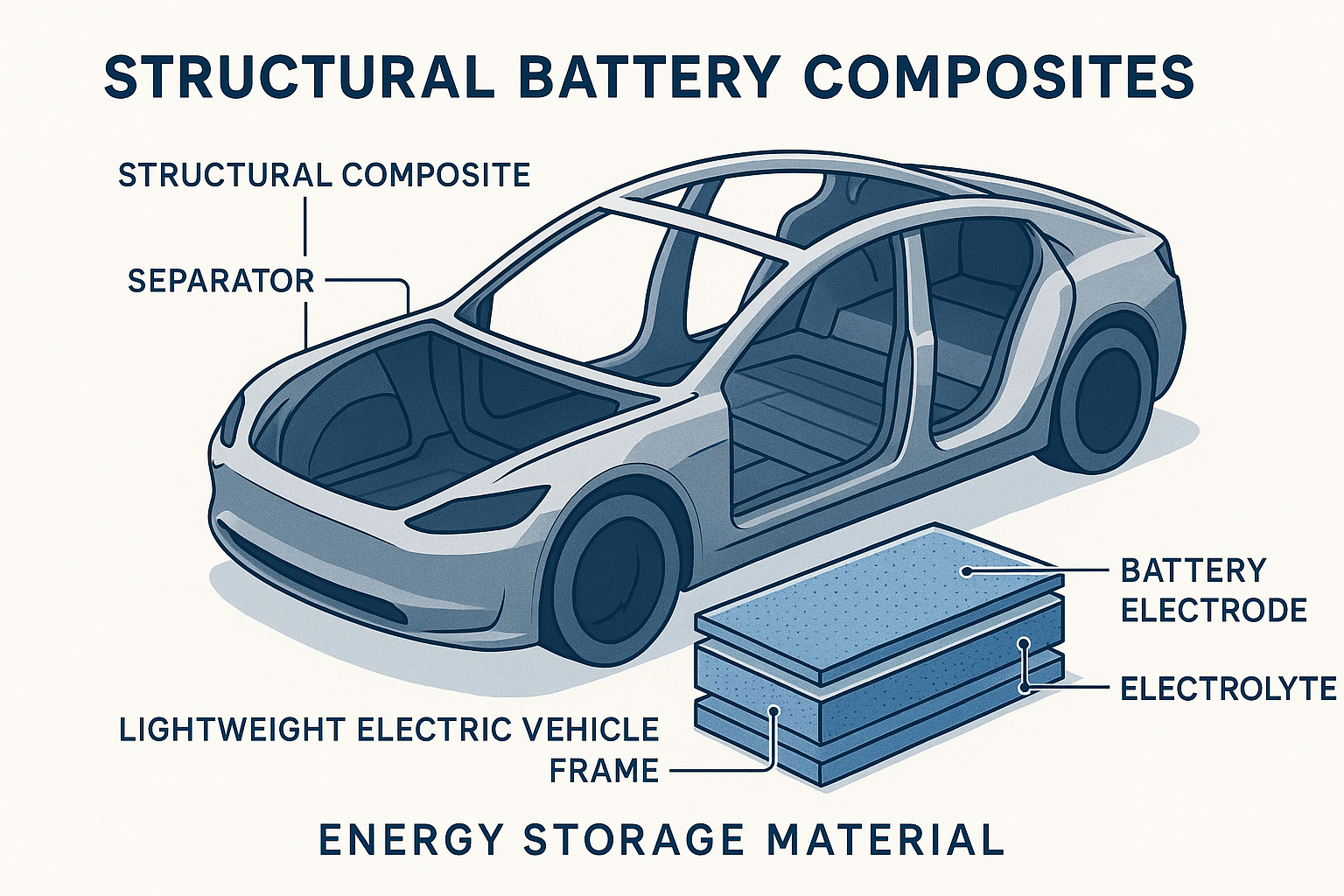
Structural Battery Composites are one of the most promising breakthroughs in material science. Unlike traditional batteries—which are heavy, bulky components—SBCs can store energy while acting as a structural part of a device or vehicle.
What Exactly Are Structural Battery Composites?
Think of SBCs as materials that serve two roles at once:
- They behave like a battery by storing and delivering electrical energy.
- They act like a structural component, supporting weight and improving durability.
This dual functionality eliminates the need for separate, bulky battery packs.
Where Can SBCs Be Used?
These next-gen materials could drastically improve:
- Electric Vehicles (EVs)
Instead of carrying heavy lithium-ion packs, the car’s frame itself can store energy. - Drones & Aerospace
Reduced weight means longer flight times and improved fuel efficiency. - Consumer Electronics
Ultra-thin, lightweight smartphones and laptops could soon become standard. - Robotics & Wearables
Robots could be more efficient; wearables could be lighter and more flexible.
Why Are SBCs a Game-Changer?
SBCs offer several benefits that position them as a transformational technology:
- Reduced weight, leading to better energy efficiency
- More compact designs for future devices
- Lower manufacturing costs (once scaled)
- Increased product lifespan due to lightweight, durable components
- Improved sustainability, since fewer materials are used overall
In the EV market alone, SBCs could help electric cars travel farther with fewer emissions during manufacturing.
Osmotic Power Systems: Clean Electricity from Salt and Fresh Water
Structural Batteries & Osmotic Power, Osmotic power, also known as salinity gradient energy, is a renewable energy source created when freshwater meets saltwater. The natural movement of water molecules across membranes produces usable energy.
How Does Osmotic Power Work?
Structural Batteries & Osmotic Power, Osmotic power systems use semi-permeable membranes that allow freshwater to flow into saltwater due to osmotic pressure.
This movement creates pressure that can drive a turbine, generating clean electricity.
Where Could Osmotic Power Be Used?
Osmotic energy plants can be placed in:
- River mouths where freshwater meets the sea
- Desalination plants
- Offshore energy stations
- Remote areas needing renewable, stable energy
Benefits of Osmotic Power
This tech offers huge sustainability potential:
- 100% renewable energy source
- No pollution or greenhouse gas emissions
- Predictable energy production, unlike solar or wind
- Low ecological impact, making it environmentally friendly
- Massive global scalability, since oceans and rivers are everywhere
As membrane technology improves, osmotic energy could rival major renewable power sources.
Why Structural Batteries & Osmotic Power These Technologies Matter for the Future
As the world prioritizes sustainability, efficiency, and new-age engineering, Structural Battery Composites and Osmotic Power Systems stand out as frontrunners in the next industrial revolution. These technologies promise to:
- Redefine how vehicles, electronics, and machines are powered
- Generate clean, natural energy without harming the environment
- Make products lighter, smarter, and more durable
- Support global climate goals and reduce carbon footprints
The transition toward a connected, energy-efficient world will rely heavily on breakthroughs like these.
Conclusion: A Future Powered by Innovation
The rise of Next-Gen Materials & Energy Tech marks a new chapter in global technological progress. Structural Battery Composites offer a future where devices and vehicles are lighter, stronger, and self-powered, while Osmotic Power Systems provide a clean and renewable way to harness the natural energy of our planet.
These innovations are not just scientific advancements—they are solutions to some of the world’s biggest challenges: energy efficiency, climate change, and resource optimization. As research accelerates and industries adopt these technologies, we move closer to a world that is both technologically advanced and environmentally responsible.
The future is not just digital—it is sustainable, material-driven, and powered by nature itself.
